Statement
Consider a function  . Then

Proof
This proof is taken from Khan Academy.
To prove the chain rule, we must first prove 2 lemmas:
- If a function is differentiable, then it is also continuous
- If function
 is continuous at
  , then
  as
as 
If a function is differentiable, then it is also continuous
By the definition of the derivative:
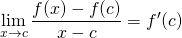
A function is continuous at a point,  , if
, if
- is in the domain of

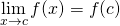
Assume that is differentiable at . Then,
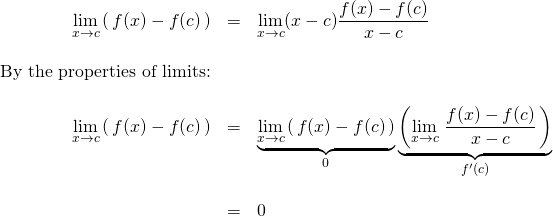
So,
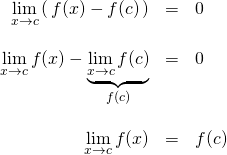
But 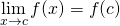 , by definition, means that is continuous at .
If function  is continuous at
  , then
  as
as 
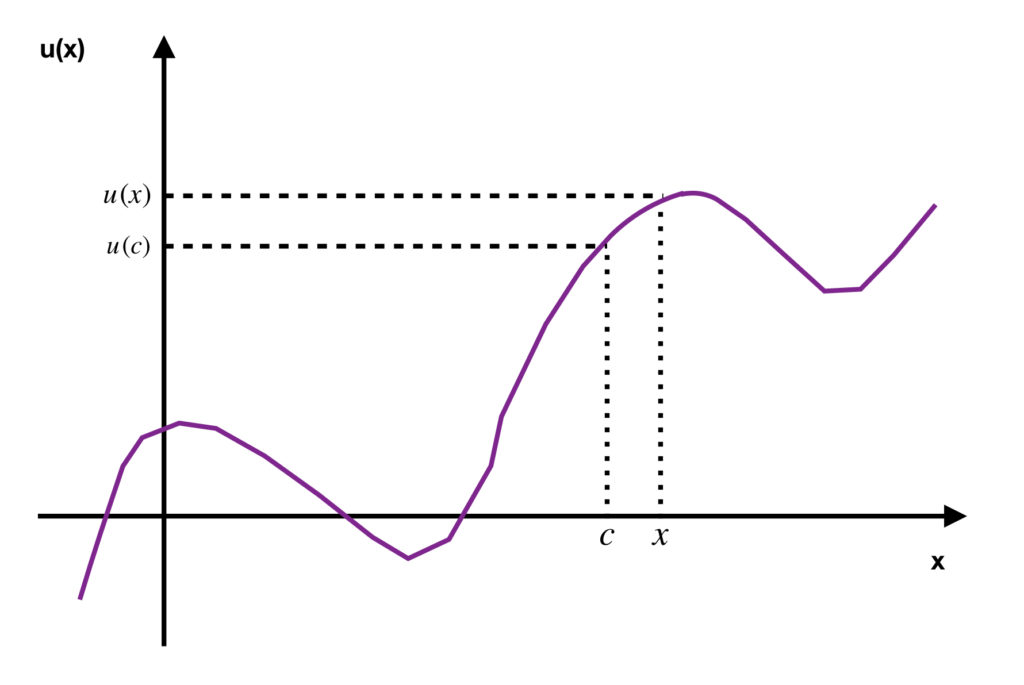
By definition,  is continuous at
  if
if
- is in the domain of
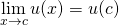
We can rewrite the last equation in a couple of different ways:
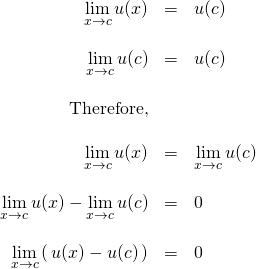
Let


We can substitute these values into the equation  : We get:
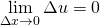
This is equivalent to saying that, as , , which is what we sought to prove.
Proof of the chain rule
With the background laid, we are now ready to prove the chain rule.
We start by assuming that functions  and are differentiable at . We can write the chain rule as:
![\frac{d}{dx}\left[ y(u(x)) \right] = \frac{dy}{dx} = \frac{dy}{du}\cdot\frac{du}{dx}](https://www.samartigliere.com/wp-content/ql-cache/quicklatex.com-3044063cec152068a622de4461db0ba4_l3.png "Rendered by QuickLaTeX.com") :
:
By the definition of the derivative:
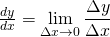
Now
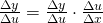
Substituting this into our previous definition of  :
:
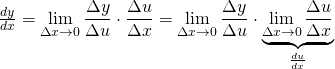
We showed in our proof of our second lemma that, as , . We substitute for in the limit  :
:
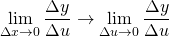
But we know what  is; it’s the derivative
  .
.
Thus, we have:
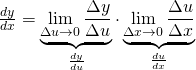
So we end up with

which is what we wanted to prove.